
Iran–Israel War 2026: Latest Death Toll, Global Impact, Oil Crisis & Is World War 3 Possible?

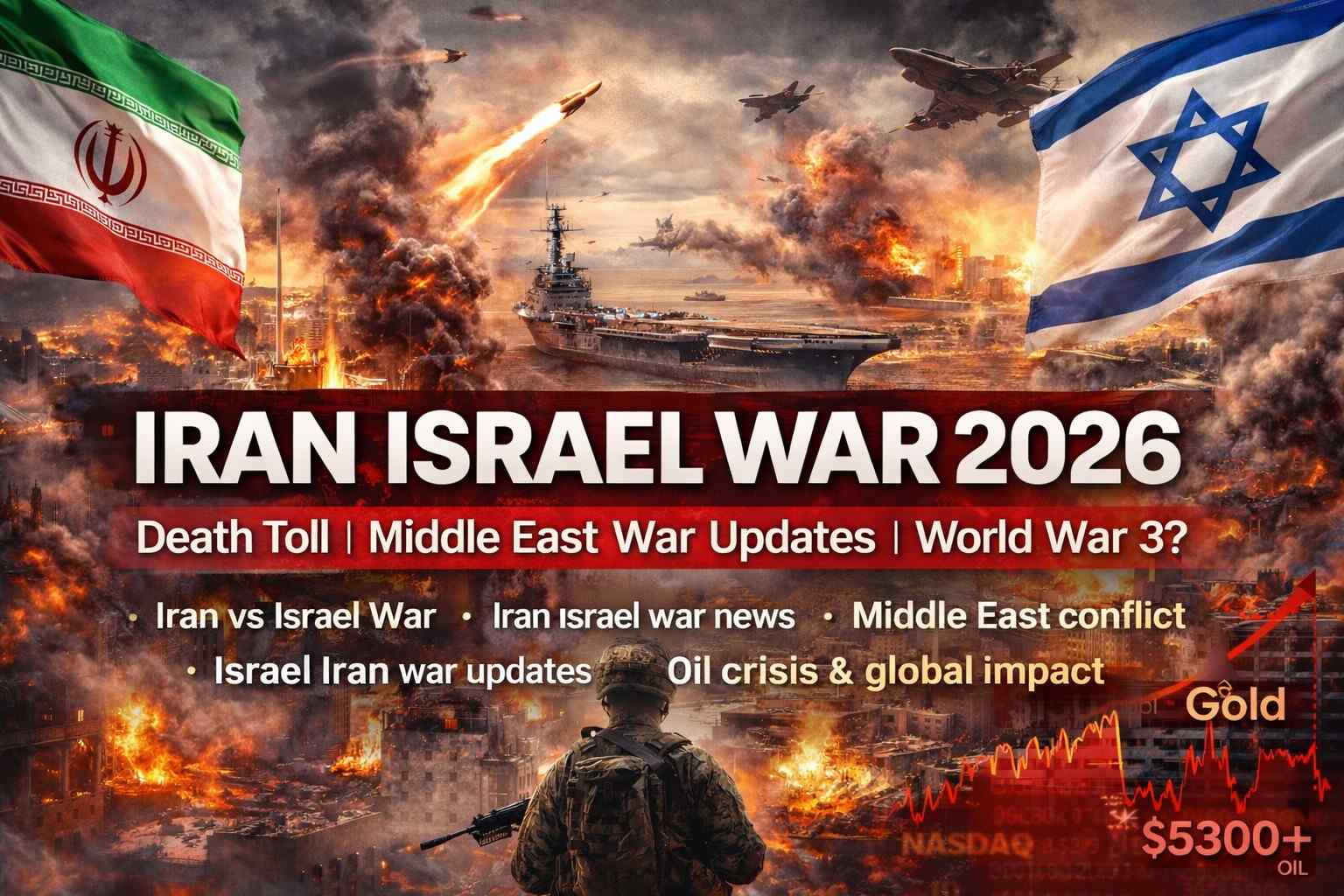
Iran–Israel War 2026: Latest Death Toll, Global Impact and What Could Happen Next
The escalating conflict between Iran and Israel in 2026 has rapidly become one of the most dangerous geopolitical crises in recent history. What began as targeted military strikes has now expanded into a regional conflict affecting multiple countries, global markets, and international security.
As tensions intensify across the Middle East, governments, analysts, and international organizations are closely monitoring the situation. Reports emerging from different sources indicate rising casualties, missile exchanges, and economic shocks worldwide.
This article explains the latest reported death toll, the strategic situation, the countries involved, and the possible global consequences of the Iran–Israel war.
How the Iran–Israel Conflict Escalated
The conflict intensified after a series of military operations targeting strategic infrastructure and military facilities. Both sides accuse each other of launching aggressive attacks that threaten national security.
According to multiple international media outlets, the situation escalated rapidly after coordinated military strikes targeted key Iranian locations believed to be linked with missile programs and military leadership.
Iran responded with missile and drone attacks targeting Israeli territory as well as strategic military bases connected to Western allies.
Within days, the conflict expanded beyond the two countries and began affecting neighboring regions across the Middle East.
Latest Reported Death Toll
As of early March 2026, different organizations and media sources have reported varying casualty numbers due to the ongoing conflict.
Iran
Reports indicate that Iran has suffered the highest number of casualties since the beginning of the war.
- Several international media outlets estimate more than 1,000 deaths across different regions of Iran.
- The Iranian Red Crescent reported that by March 4, over 780 people had been killed.
- Human rights monitoring group Hengaw claimed the number of deaths could be as high as 2,400, including both civilians and military personnel.
- Among these reported deaths, around 310 are believed to be civilians, while the rest are reported to be members of security forces or military units.
Many of the deaths reportedly occurred in major cities where strategic facilities and command centers were targeted.
Due to restricted access and communication limitations during wartime, exact casualty figures remain difficult to confirm.
Israel
Israel has also experienced casualties due to missile and drone attacks launched in retaliation.
According to official reports:
- 12 civilians have been killed
- More than 1,274 people have been injured
Emergency response teams across Israeli cities have been responding to missile strikes and drone attacks targeting infrastructure and residential areas.
Latest updates from March 5 indicated that no new deaths were reported during the morning missile attacks, though air raid sirens and interception systems remained active across several regions.
Israel’s advanced missile defense systems have reportedly intercepted many incoming threats, reducing potential casualties.
Impact on Other Countries
The conflict has also affected several neighboring countries and international forces stationed in the region.
United States
The Pentagon confirmed that six American military personnel have been killed since the start of the escalation. These casualties reportedly occurred at military bases located within the broader Middle East region.
The United States has increased security measures for its troops and installations in the region.
Lebanon
Lebanon has also experienced casualties linked to cross-border strikes and military activity.
Reports indicate that between 50 and 70 people have been killed in Israeli attacks within Lebanese territory. The exact details remain under investigation as tensions along the border continue.
Gulf Countries
Several Gulf nations have also reported casualties as the conflict affects regional security.
Reported deaths include:
- Kuwait – 3 deaths
- United Arab Emirates – 3 deaths
- Bahrain – 1 death
These incidents highlight how rapidly the conflict has expanded beyond its original participants.
Regional Security Concerns
Security experts warn that the Iran–Israel war could trigger a much larger regional conflict if more countries become directly involved.
Military activity across the Middle East has increased significantly. Air defenses have been activated in multiple countries, and governments are closely monitoring missile launches and drone activity.
International airlines have also rerouted or canceled flights over several areas due to safety concerns.
The growing involvement of regional allies and military bases raises concerns about further escalation.
Global Economic Impact
Beyond the humanitarian cost, the war is already affecting global financial markets and energy supply chains.
Oil Prices Rising
One of the biggest concerns is the potential disruption of oil supply.
The Strait of Hormuz, a crucial shipping route through which nearly 20% of the world's oil supply passes, has become a focal point of concern.
Market analysts warn that oil prices could rise dramatically if shipping routes are disrupted.
Financial Market Volatility
Global markets reacted immediately to the escalating tensions.
Major stock indices experienced declines as investors moved toward safer assets such as:
- Gold
- Government bonds
- Stable currencies
Gold prices have surged as investors look for protection against geopolitical uncertainty.
Travel and Security Alerts
Many governments have issued travel advisories for parts of the Middle East.
Airlines have suspended or rerouted flights through certain airspaces, while embassies are advising citizens to remain cautious.
These measures reflect the growing concern that the conflict could expand further.
Could the Conflict Expand Further?
Experts remain divided about how the situation might develop in the coming weeks.
Several possible scenarios are being discussed:
Limited Regional Conflict
The war may remain confined primarily to Iran and Israel with occasional regional incidents.
Expanded Middle East War
Additional countries or armed groups could become involved, increasing the scale of the conflict.
Diplomatic Intervention
International diplomatic efforts may push for a ceasefire or negotiations to prevent further escalation.
Global powers including the United Nations, European nations, and Asian countries have called for restraint and dialogue.
Final Thoughts
The Iran–Israel war in 2026 represents one of the most serious geopolitical crises of the decade. Rising casualties, regional instability, and global economic impact have made the situation a major international concern.
While official casualty figures continue to evolve, the humanitarian consequences and geopolitical tensions are already significant.
The coming weeks will likely determine whether the conflict stabilizes through diplomacy or escalates into a broader regional confrontation.
For now, the world continues to watch closely as events unfold across the Middle East.
Disclaimer:
This website publishes content for general informational and educational purposes only. All articles are based on publicly available information, reports, and sources at the time of publishing. The publisher does not make any warranties or representations regarding the accuracy, completeness, reliability, or timeliness of the information. Content related to news, sports, entertainment, finance, technology, automobiles, jobs, or any other category should not be considered as official, legal, financial, medical, or professional advice. Readers are advised to verify information independently before taking any action.
Discussion (0)
Join the conversation.
Sign In to CommentNo comments yet. Be the first to start the discussion.