Mother of All Deals: How the India–EU FTA Will Change Prices, Jobs, and Trade

The "Mother of All Deals" is Official: How the India-EU FTA Changes Everything for You
It’s official. After 18 years of "will-they-won't-they" negotiations, India and the European Union (EU) have finally signed what experts are calling the "Mother of All Deals."
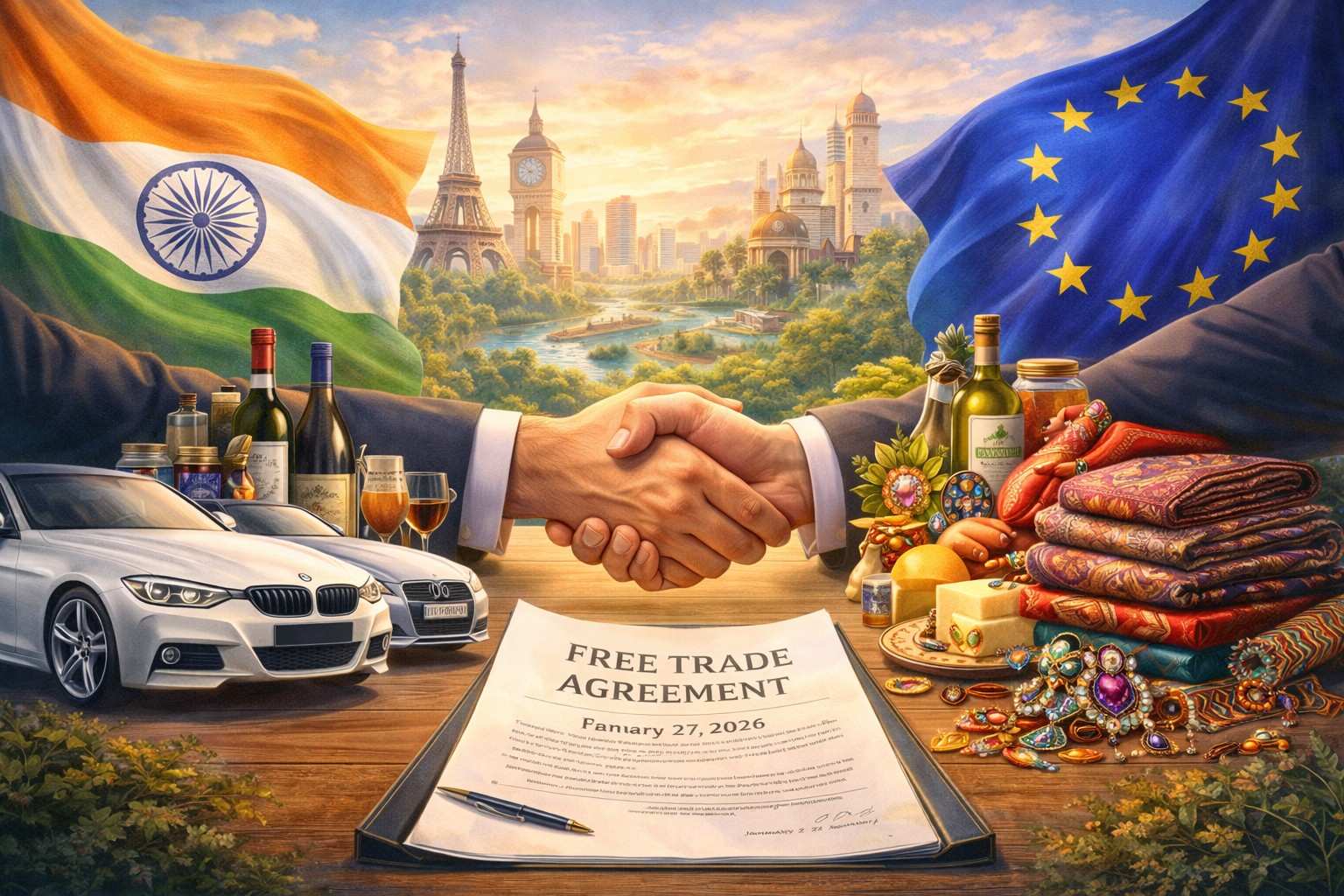
Signed today, January 27, 2026, this Free Trade Agreement (FTA) isn't just a piece of paper—it’s a massive economic bridge connecting 2 billion consumers and representing 25% of the world's GDP.
If you’ve been dreaming of a cheaper BMW or wondering how Indian textiles will conquer Paris, here is everything you need to know about this historic pact.
1. Why the Hype? (The Big Picture)
Negotiations started way back in 2007. Since then, the world has changed, but the goal remained the same: to slash the high taxes that made trade between India and Europe difficult. According to official insights on Press Information Bureau (PIB), this deal is designed to "de-risk" economies and create a stable alternative to traditional supply chains.
2. What Gets Cheaper? (The Consumer Win)
Let’s talk about your wallet. Because India is slashing tariffs on 96.6% of EU goods, your shopping list is about to look very different:
- Luxury Cars: Those 110% import duties on brands like Mercedes, Audi, and Volvo are crashing down to 10% (for a specific yearly quota).
- Wines & Spirits: Love French wine or Scotch? Duties are dropping from a staggering 150% to just 20%.
- The Gourmet Kitchen: High-end olive oil, Swiss chocolates, Italian pasta, and European cheeses will see zero-duty entry, making them much more affordable at your local supermarket.
3. The "Make in India" Boost: Export Goldmine
This isn't a one-way street. Indian businesses are the biggest winners here. Per analysis by The Economic Times, Indian exporters now get duty-free access to 27 European countries.
- Textiles & Leather: Indian garment manufacturers can now compete head-to-head with Vietnam and Bangladesh without the tax burden.
- Pharma & Chemicals: India’s "Pharmacy of the World" status gets a massive boost with easier certification and zero tariffs.
- Gems & Jewellery: Handcrafted Indian jewelry is expected to see a 20-30% rise in demand across European capitals.
4. Protecting the Roots: What’s Not Included?
To protect Indian farmers, the government has kept "Sensitive Sectors" out of the deal. You won't see cheap European milk or wheat flooding the market. Dairy and certain agricultural grains remain protected to ensure the livelihoods of millions of Indian farmers are not disrupted.
5. More Than Just Trade: The Defense Angle
In a surprise move, the deal includes a Security and Defence Strategic Partnership. This means India and Europe will now co-develop military technology, reducing reliance on single-country imports and strengthening maritime security in the Indo-Pacific.
The Bottom Line
The India-EU FTA is a game-changer. It’s expected to create millions of jobs in India and bring world-class European technology to our doorstep. While the legal fine print will be finished by mid-2026, the era of "expensive imports" is officially coming to an end.
Disclaimer:
This website publishes content for general informational and educational purposes only. All articles are based on publicly available information, reports, and sources at the time of publishing. The publisher does not make any warranties or representations regarding the accuracy, completeness, reliability, or timeliness of the information. Content related to news, sports, entertainment, finance, technology, automobiles, jobs, or any other category should not be considered as official, legal, financial, medical, or professional advice. Readers are advised to verify information independently before taking any action.
Discussion (0)
Join the conversation.
Sign In to CommentNo comments yet. Be the first to start the discussion.